Exercise Snacking: Tiny Movement Breaks That Undo Desk Damage
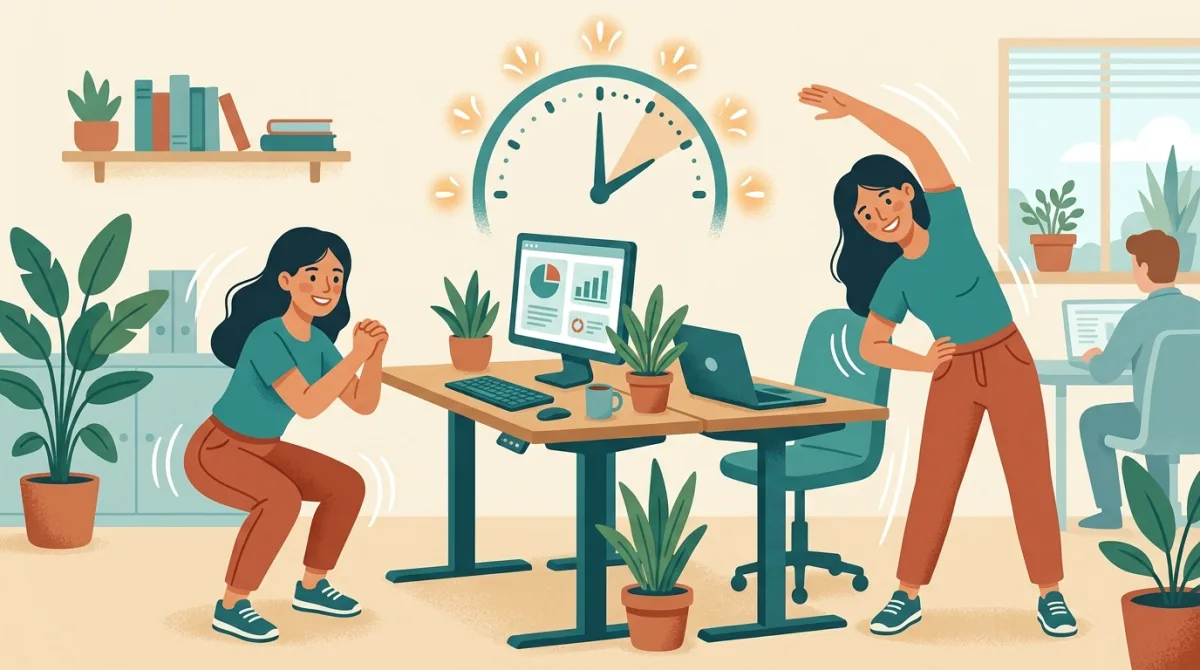
‘Exercise snacking’ means breaking activity into short 1–5 minute bursts sprinkled through your day instead of one long workout. For desk-bound people it's a game-changer: brief stair climbs, squats or brisk walks after meals improve fitness and help blunt blood-sugar spikes — and they're far easier to stick to.
The biggest barrier to exercise isn't laziness — it's time. ‘Exercise snacking’ sidesteps that by scattering tiny bouts of movement through your day. No gym, no kit, no hour-long block to find.
The idea
Rather than one 45-minute session, you take several 1–5 minute movement breaks: a flight of stairs, a set of squats, a brisk lap of the office, a minute of marching. The bursts add up — and crucially, they break up the long sitting that damages metabolic health.
Why short bursts work
Research shows brief, frequent activity improves cardiovascular fitness and, importantly, helps control blood sugar — especially a short walk or a few squats after meals, when glucose tends to spike. Breaking up prolonged sitting also eases stiffness and supports circulation.
Easy 'snacks' to try
- After each meal: a 2–5 minute walk or 20 calf raises.
- Every hour at a desk: stand, stretch, 10 squats or a quick lap.
- Take the stairs as a deliberate 'snack', not an inconvenience.
- Phone calls: walk while you talk.
Key takeaways
- Break movement into 1–5 minute bursts through the day.
- A short walk after meals helps blunt blood-sugar spikes.
- Breaking up long sitting matters as much as workouts.
- It's easier to stick to than one long gym session.
This article is for general education and is not medical advice. Always consult a qualified healthcare professional about your individual health.