Alpha-Gal Syndrome: The Tick Bite That Can Make You Allergic to Red Meat
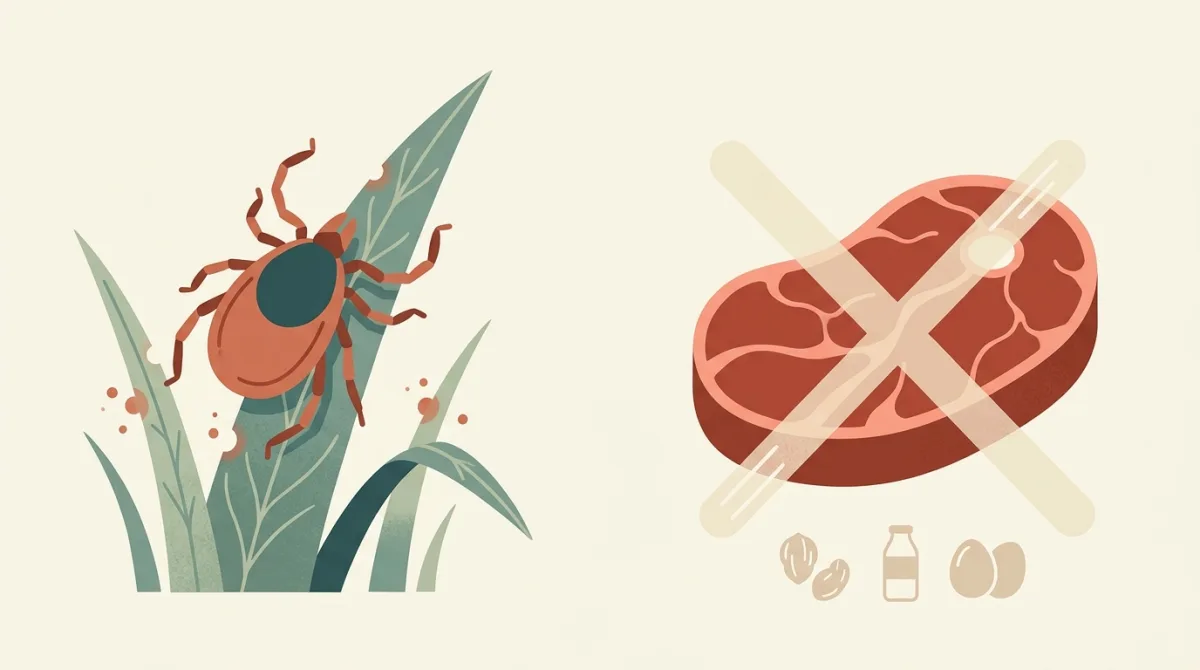
Alpha-gal syndrome is a real, rising allergy where a tick bite reprograms your immune system to react to red meat (beef, pork, lamb) and sometimes dairy or gelatin. Its hallmark is delayed — hives, stomach upset or even anaphylaxis hitting 2–6 hours after eating, which is why it's so often missed. A blood test can confirm it.
It sounds like science fiction: get bitten by a tick, then months later break out in hives after a burger. But alpha-gal syndrome (AGS) is a genuine and increasingly recognised allergy — and because its timing is so strange, many people suffer for years before getting a diagnosis.
How a tick bite causes a meat allergy
Certain ticks carry a sugar molecule called alpha-gal, which is also found in red meat. When the tick bites you, your immune system can start treating alpha-gal as a threat. After that, eating mammalian meat — beef, pork, lamb, venison — can trigger an allergic reaction. Some people also react to dairy, gelatin, and certain medications.
Why it's so easily missed
Unlike a peanut allergy that strikes within minutes, AGS reactions are delayed by 2–6 hours. So a reaction to dinner might hit in the middle of the night, with no obvious link to food. Symptoms include:
- Hives, itching or swelling
- Stomach pain, nausea, diarrhoea
- Drop in blood pressure, dizziness
- In severe cases, anaphylaxis (a medical emergency)
What to do
If you've had unexplained night-time hives or stomach attacks — especially if you spend time outdoors — ask your doctor about an alpha-gal IgE blood test. Management means avoiding mammalian meat (poultry and fish are fine) and trigger products, and carrying an epinephrine auto-injector if your doctor advises. Prevention is key: use insect repellent, cover up in grassy areas, and check for ticks after being outdoors.
Key takeaways
- A tick bite can cause a delayed allergy to red meat.
- Reactions hit 2–6 hours after eating — easy to miss.
- A simple alpha-gal IgE blood test confirms it.
- Prevent tick bites: repellent, covered skin, tick checks outdoors.
This article is for general education and is not medical advice. Always consult a qualified healthcare professional about your individual health.